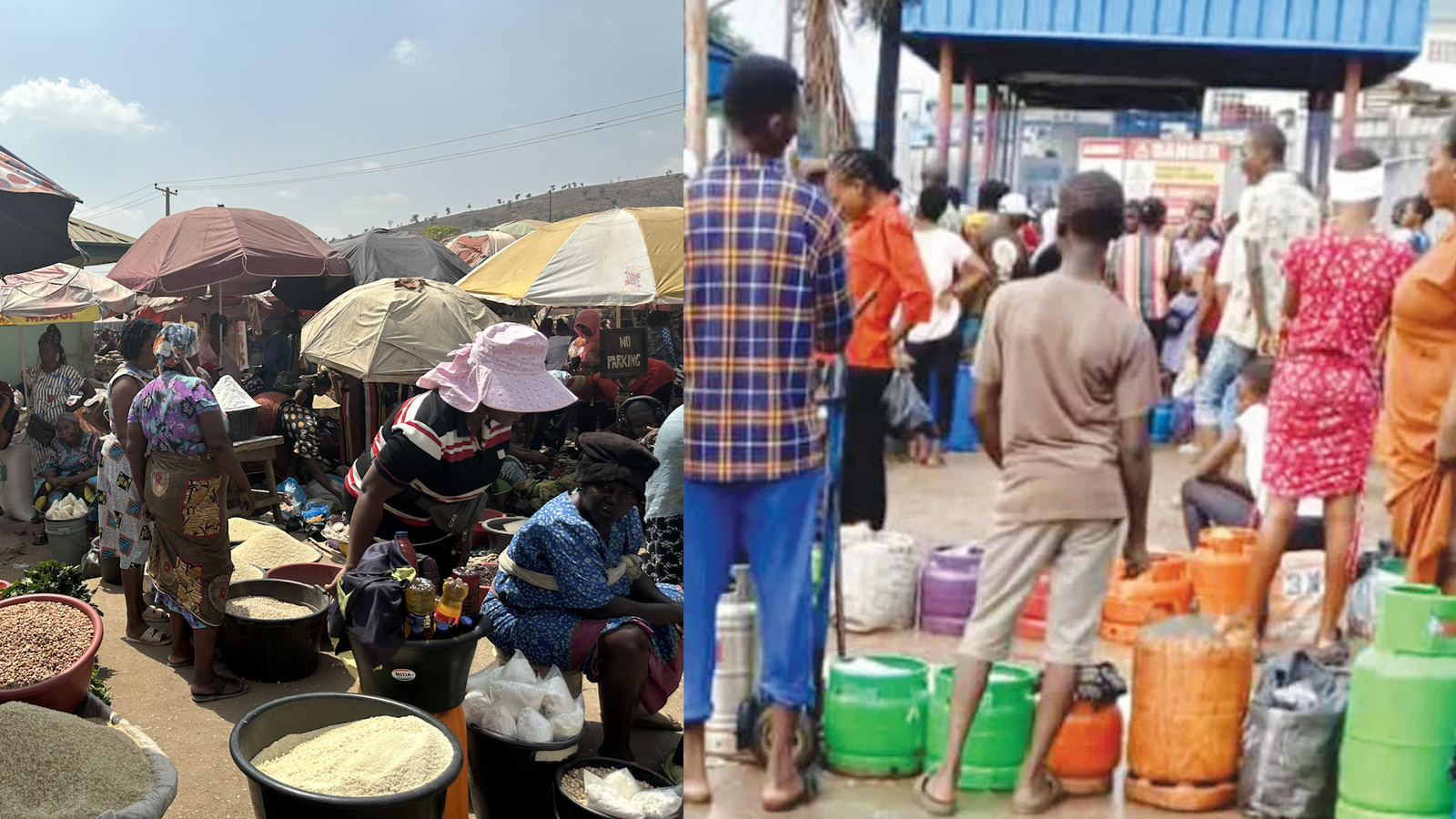

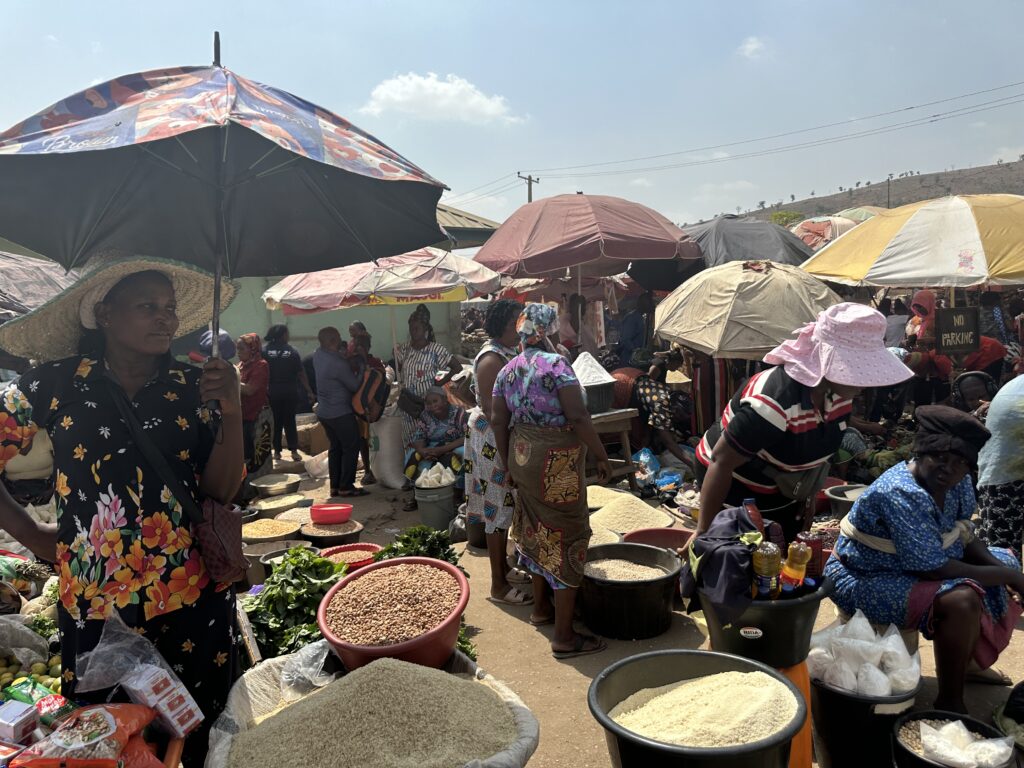
Abuja, the nation’s capital, is often cited as one of the most expensive cities in Nigeria, but for residents of Nyanya, the local Wednesday Market has long offered a reprieve.
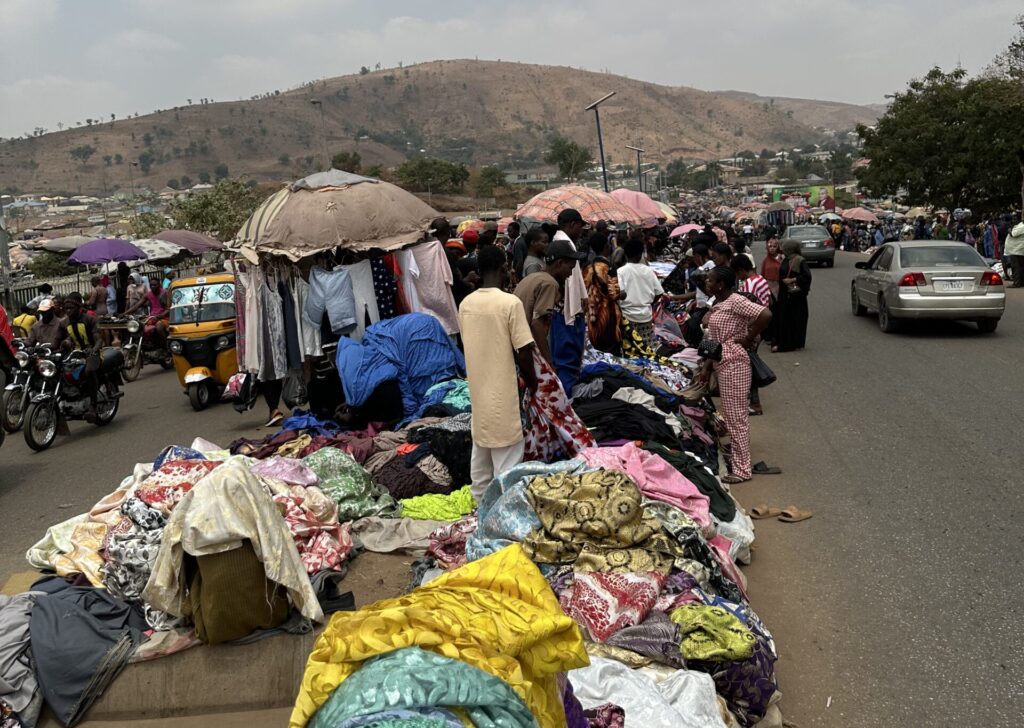
The market, usually bustling with traders from neighbouring towns and buyers spilling onto the roadside, is known for affordable items like fairly used clothes, or okrika, and reasonably priced foodstuffs, making it a popular alternative to supermarkets.
However, its appeal is now under strain due to the recent increase in petrol prices. Both traders and customers report that rising transportation costs are driving prices higher, affecting access to everyday goods.
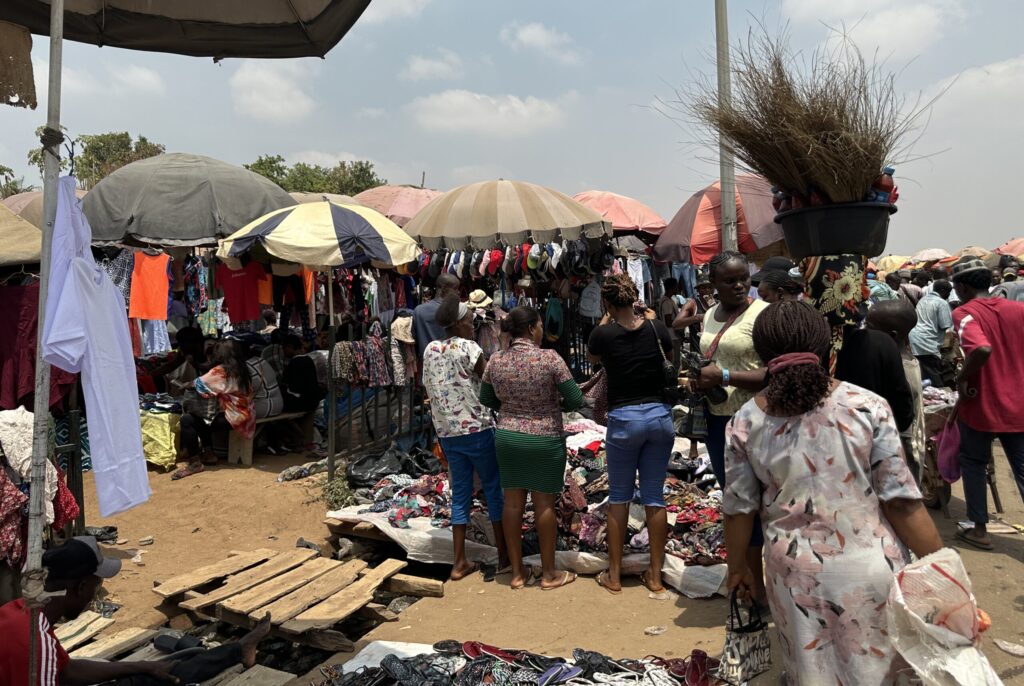
Despite the economic pressure, residents continue to show resilience, while urging the government to intervene and ease the burden on households already grappling with high living costs.
Another commodity affected by the growing Middle East tension is cooking gas.
Many families say refilling their gas cylinders has become increasingly expensive, forcing them to adjust their daily cooking habits and, in some cases, consider alternative sources of energy.
One resident, Abdulhalim, described the situation as frustrating, noting that the steady increase in the price of Liquefied Petroleum Gas (LPG), commonly known as cooking gas, is placing additional pressure on household budgets.
“The price of cooking gas is getting too high,” he said. “Before now, refilling a cylinder was something we could easily plan for, but now every time you go to refill it, the price has gone up again from 1,000 to 1,500 Naira. It is becoming difficult for families.”
Another resident warned that the rising cost may push many households to abandon gas for cheaper alternatives. “Some people are already thinking of going back to kerosene or even firewood. Gas used to be the easiest and cleanest way to cook, but now it is becoming too expensive for the average Nigerian.”
Economic expert Austin Osagie attributed the price increases to both local and global factors, explaining that conflicts in major oil-producing regions create uncertainty in supply and price volatility in international energy markets.
“When there is conflict in key energy-producing regions, it affects global oil and gas supply expectations,” Osagie said. “The tension between the United States, Israel and Iran has created uncertainty in the market, and that uncertainty often leads to rising energy prices.”
He added that Nigeria’s partial reliance on global supply chains for petroleum products, including cooking gas, means international price movements quickly reflect in the local market.
“If the crisis drags on, energy prices could remain elevated, and that would mean sustained pressure on households already dealing with rising food and transportation costs,” Osagie warned.
With cooking gas widely used in homes across the country, residents fear that continued increases could further strain family budgets and worsen the country’s growing cost-of-living challenges, compounding the pressure already felt from rising fuel prices.
By Mati Fati & Flora Iweanya