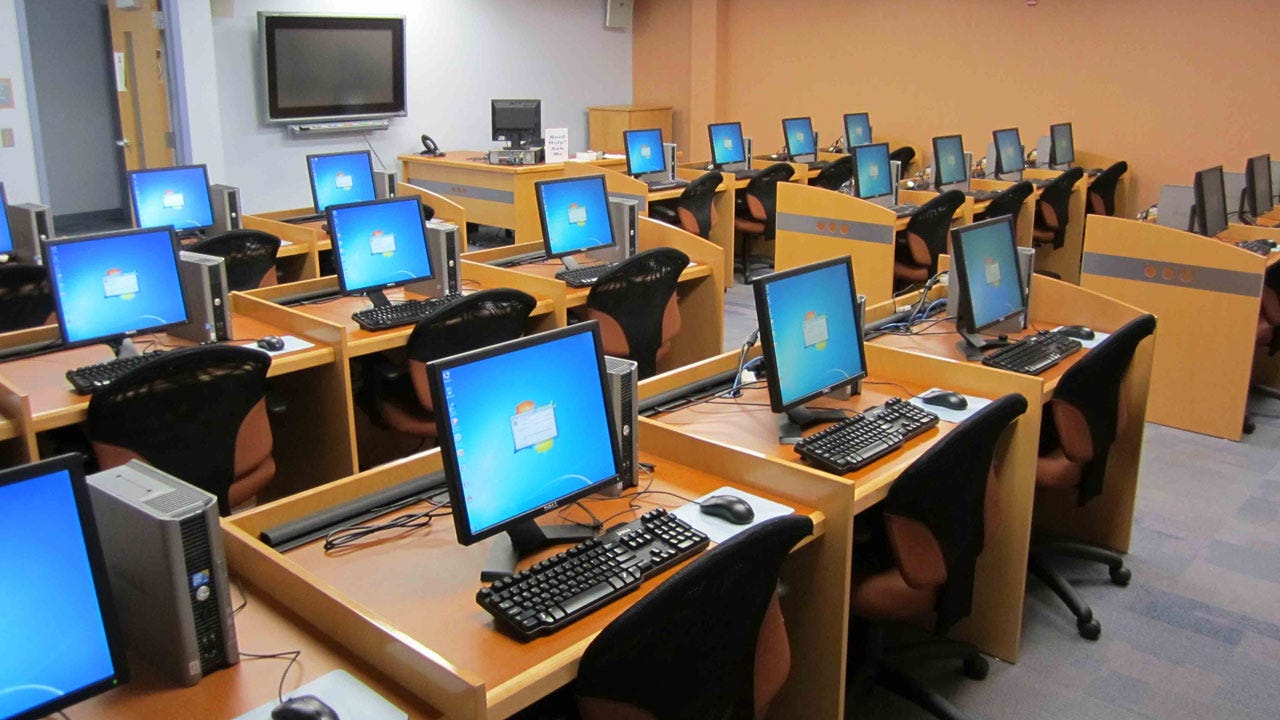

Cyber cafés were once the go-to places for internet access in Nigeria, where users paid by the hour to browse, send emails, and connect with the world.
But with smartphones and cheaper data now widely available, that model has nearly disappeared — replaced by something new.
In the early 2000s, cyber cafés served as a lifeline for internet access. Customers filled rows of desktop computers, paying for time to go online. Today, however, many Nigerians access the internet easily through mobile networks provided by companies like MTN Nigeria, Airtel Nigeria, and Globacom.
As a result, cyber café operators have had to rethink their business models.
At Corner Shop in Lugbe, Abuja, business centre owner Isiaka Shehu says while customers no longer pay to browse, demand for other services remains steady. He explains that his business now relies on services such as printing, document typing, and online registrations, which continue to attract customers daily. According to him, “Before, people came mainly to browse, but now it’s the business services that keep us running.”
Across Abuja, many former cyber cafés have evolved into business centres offering printing, photocopying, scanning, and document processing services — a shift that has helped many operators stay afloat despite declining interest in paid browsing.
For customers, these centres still play an important role. One patron, Tonia, says she visits because some online registrations cannot be completed on a mobile phone. “There are things I can’t do on my phone, especially registrations and printing, so I still come here,” she explains.
Staff at these centres also emphasize their continued relevance. Gloria Haruna notes that although smartphones and social media have made internet access easier, many people still need help navigating certain digital services. She adds that not everyone owns a computer or understands how to complete official online processes without assistance.
However, the transition has not come without challenges. Operators point to rising electricity costs, expensive equipment maintenance, and reduced patronage compared to the peak years of cyber cafés. Despite this, many say adapting into business centres has been key to their survival.
Industry observers note that while traditional browsing cafés may be fading, the demand for physical digital service points remains strong, especially for tasks that require printing, scanning, or formal documentation.
What was once a hub for internet browsing has now become a centre for essential digital services — reflecting how technology continues to reshape everyday life and businesses.
As Nigeria becomes increasingly digital, cyber cafés may no longer exist in their old form, but their evolution into business centres suggests they still have a place in the country’s modern economy.
By Zainab Ibrahim