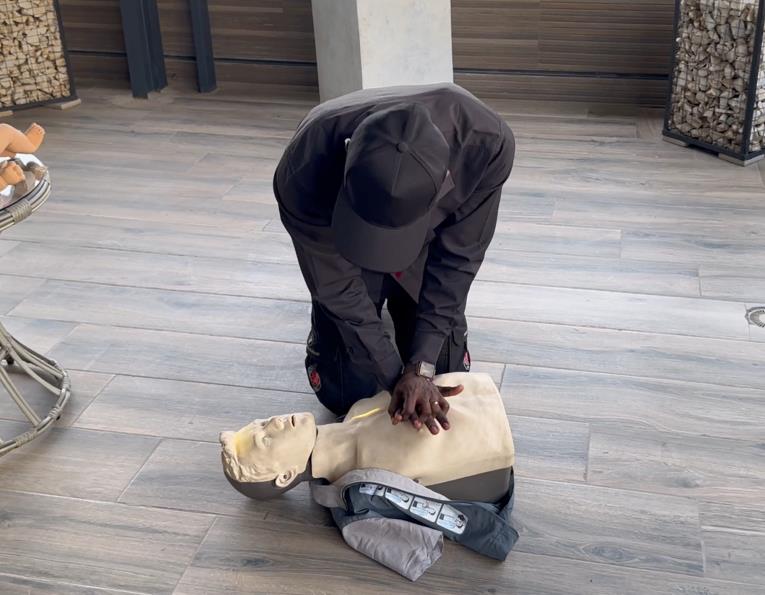

An Abuja-based CPR and first aid instructor, Emmanuel Avertse, has urged Nigerians to learn basic life-saving skills, warning that many deaths during emergencies occur because of incorrect actions taken before medical help arrives.
In an exclusive interview with RBN, Mr. Avertse said first aid remains a critical, but often overlooked skill in Nigeria, particularly in communities where access to ambulance services and hospitals may be limited.
According to him, emergencies can occur at any time, making it important for citizens to understand what to do in the first few minutes after an incident.
“Emergencies do not announce themselves. It could happen at night or in a place where there is no ambulance nearby. The first thing done during an emergency must be the right thing,” he said.

Limited Awareness
Mr. Avertse, who has about 15 years of experience training individuals and organisations on first aid and ambulance management, said one of the major challenges responders face is limited awareness among the public.
He explained that while more Nigerians are becoming willing to help during emergencies, many people still lack the training needed to provide effective assistance.
The instructor highlighted several mistakes frequently made by bystanders during emergencies, including pouring water on people who faint and giving food to someone who is choking. He said such actions can worsen a victim’s condition.
In the event that someone faints, he advised that the correct response is to allow proper ventilation and raise the person’s legs slightly to improve blood flow to the brain.
For incidents like snake bites, on the other hand, he warned against tying a tight band above the area, noting that immobilising the affected area and seeking urgent medical attention is the safer approach.
Speaking on responsiveness to emergencies, Mr. Avertse criticized the growing trend of people recording videos during emergencies instead of helping victims.
“The few seconds used to record could be the difference between life and death, especially if someone is bleeding heavily,” he said.
Life-saving Skill
According to the expert, first aid skills are not limited to doctors or nurses — anyone can learn them, including people in rural communities.
For instance, simple actions such as applying pressure to a wound can prevent severe blood loss and save lives before medical help arrives.
Even when a first aid kit is unavailable, improvised materials like clothing or cloth can sometimes be used effectively to stop bleeding.
In addition, cardiopulmonary resuscitation (CPR) is another critical technique. Used when someone is unconscious and not breathing, CPR involves chest compressions and rescue breaths to maintain blood circulation to vital organs until advanced medical care becomes available.
Importantly, CPR should continue until the victim responds or professional help arrives, making timely action crucial in emergency situations.
First Aid Education in Schools

To strengthen emergency response nationwide, Emmanuel Avertse emphasized the importance of introducing first aid training in schools and institutions across Nigeria.
He proposed establishing first aid clubs in primary and secondary schools, while integrating basic life-saving training into general studies courses at tertiary institutions.
Beyond schools, Avertse encouraged organisations and workplaces to collaborate with training providers to equip staff with essential life-saving skills. “Learning first aid is something everyone should continue to do whenever the opportunity comes. You may not know when you will need it,” he added.
Residents also weighed in, highlighting the gap in preparedness. Some told RBN News that many homes, schools, organisations, and other institutions have long neglected the importance of first aid kits for emergencies.
For example, Noel Andrew, a resident of Wuse in Abuja, recalled the use of traditional medicine in earlier times while reaffirming the need for modern first aid today.
Similarly, Joshua Adamu from Suleja in Niger State, speaking in Abuja, emphasized the necessity of organising orientations to raise public awareness and consciousness about first aid.
Overall, experts stress that first aid remains critical to preserving life, promoting quicker recovery, reducing the severity of injuries, and fostering a safer environment for everyone involved in an emergency.
Report by Godwin Igber