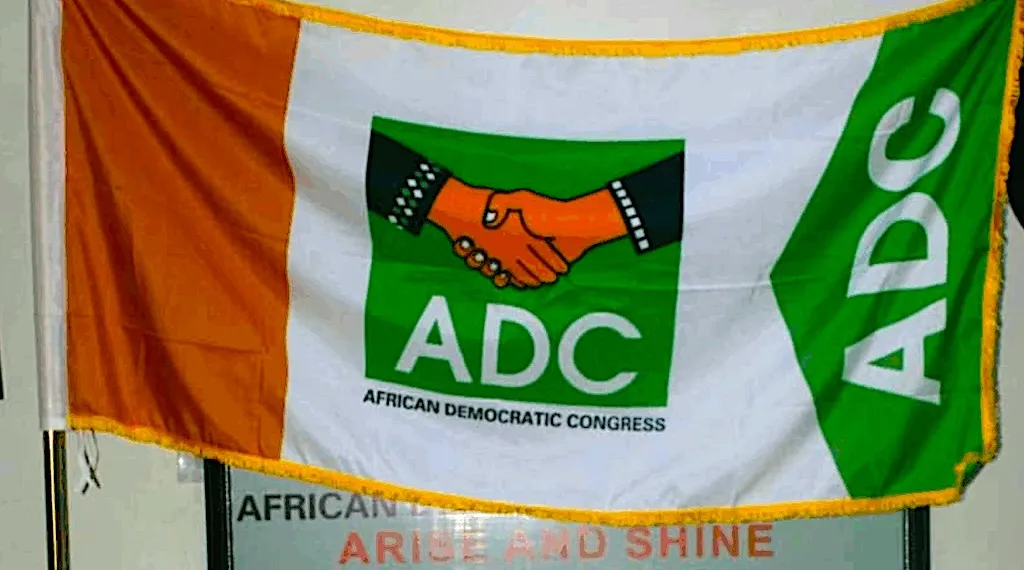

The African Democratic Congress (ADC) has criticised the £746 million port rehabilitation agreement signed by President Bola Tinubu during his state visit to the United Kingdom, describing the deal as disproportionately skewed in favour of the UK and calling for full transparency on its terms.
In a statement signed by its National Publicity Secretary, Bolaji Abdullahi, the party argued that while the Federal Government has presented the agreement as a diplomatic success, it primarily benefits British economic interests. According to the ADC, the deal supports the UK’s steel industry, safeguards thousands of jobs, and leaves Nigeria shouldering the financial burden.
Information available on the UK Government website describes the agreement as a “major vote of confidence in UK manufacturing” and indicates that it will be delivered through UK Export Finance’s (UKEF) Buyer Credit Facility, arranged by Citibank, N.A., London Branch.
UKEF, the UK Government’s export credit agency, provides financing that allows foreign buyers to access loans from commercial banks for the purchase of UK goods and services, with payments made directly to the exporters.
Under the terms of the agreement, at least £236 million in supplier contracts will be awarded to British companies. Additionally, British Steel is expected to supply 120,000 tonnes of steel billets under a £70 million contract, marking its largest UKEF-backed export order to date.
These materials are intended for the rehabilitation of the Tin Can and Apapa Ports in Lagos, key infrastructure projects critical to Nigeria’s import and export activities.
The ADC expressed concern that a significant portion of the funds could either remain within the UK or be repatriated back, leaving Nigeria with minimal direct benefits. The party questioned the overall value of the agreement, particularly at a time when millions of Nigerians face poverty, unemployment, and worsening insecurity.
Abdullahi stressed the need for comprehensive disclosure, including details on repayment terms, interest rates, local content obligations, and employment opportunities for Nigerians.
“There are still several unanswered questions regarding this agreement, including the repayment duration, applicable interest rate, the proportion of local goods and services involved, and the number of direct and indirect jobs to be created for Nigerians,” the statement read.
The ADC also highlighted the importance of understanding the broader framework of the project, requesting information on timelines, training and skills transfer provisions, expatriate staff limits, and specific opportunities for small and medium enterprises and local communities.
Warning against potential long-term consequences, the party said that without full transparency, Nigerians could conclude that the agreement resembles a colonial-era treaty, mortgaging the country’s future for symbolic value.
“Nigerians deserve full disclosure on agreements that involve public debt and major infrastructure commitments,” Abdullahi added, urging the Federal Government to release complete details to the public.