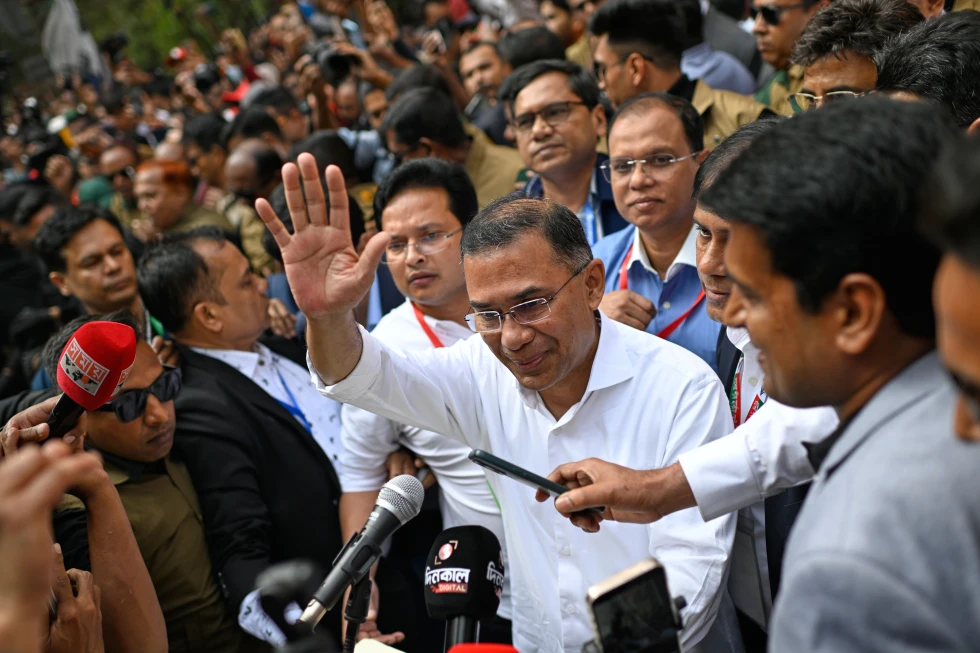

Bangladesh Nationalist Party (BNP) has secured a sweeping victory in Friday’s general elections, marking the first national vote since the 2024 mass uprising that forced former Prime Minister Sheikh Hasina from power. Unofficial results show the BNP and its allies won 212 of the 299 contested seats, positioning party leader Tarique Rahman to become the country’s next prime minister.
Speaking shortly after the results emerged, Rahman described the outcome as “a victory for democracy and the resilience of the Bangladeshi people,” pledging to prioritise economic recovery, institutional reforms, and national reconciliation. “Our responsibility begins now,” he said. “We will work to rebuild trust in governance and ensure stability for every citizen.”
The elections were widely viewed as a test of Bangladesh’s democratic recovery, with turnout estimated at nearly 60 percent. Rahman, son of former Prime Minister Khaleda Zia, returned to the country after 17 years in exile and campaigned on promises of political reform and economic revitalisation.
While the BNP celebrated what it called a historic mandate, the Jamaat-e-Islami-led alliance raised concerns about aspects of the counting process, stating it had “serious questions about the integrity of the results.” Party representatives urged electoral authorities to ensure transparency in the final certification of results. However, observers reported that voting was largely peaceful, and electoral officials maintained that established procedures were followed.
The polls were conducted without the participation of the Awami League, Hasina’s long-dominant party, which was barred from contesting a move that reshaped the political landscape and sparked debate over inclusivity. Regional powers India and Pakistan have both congratulated Rahman and the BNP, signalling diplomatic readiness to engage with the incoming administration. As Bangladesh prepares for a transition of power, attention now turns to how the new government will address economic pressures, social cohesion, and proposed constitutional reforms approved alongside the vote.