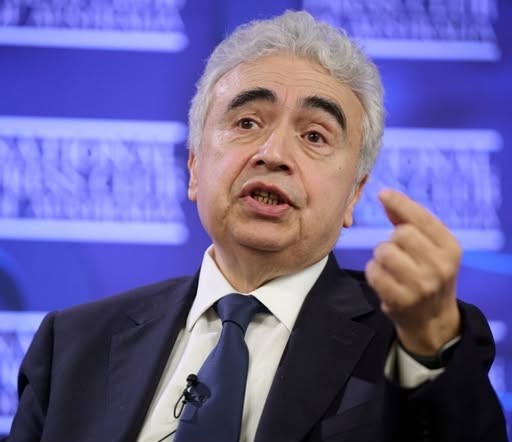
Fatih Birol, executive director of the International Energy Agency (IEA), has cautioned that countries worldwide will face serious consequences if tensions in the Middle East persist and the Strait of Hormuz remains disrupted.
Speaking during a meeting with the International Monetary Fund (IMF) and World Bank Group in Washington DC, Birol stressed that no country is immune to the economic and energy fallout from the ongoing crisis.
His remarks follow the collapse of peace talks between the United States and Iran, raising fears of further escalation, including potential restrictions on movement through the Strait of Hormuz — a critical global oil route.
“The world is facing the greatest energy security challenge in history. It is oil, it is natural gas, but it is also other vital commodities, such as fertilizers, petrochemicals, helium and others,” Birol said.
“The scale of the problem is huge, and countries will suffer under this, some more than others, but I can tell you no country is immune to this problem”.
He noted that March had already been difficult for global energy supply, warning that April could be worse as disruptions begin to fully impact the market.
“…because during the month of March, we have already received cargoes which were loaded well before the crisis started to the markets, and during the month of April, nothing has been loaded,” he said.
“The longer the disruption is, the more severe the problem becomes.”
Birol added that the IEA is tracking over 80 energy facilities affected by the conflict, with a significant number already severely damaged, and warned that recovery could take a long time even after hostilities end.
Despite the release of 400 million barrels of oil by IEA member countries to stabilise prices, he maintained that this is only a temporary measure.
“It is good, but this is not the solution. This is only reducing the pain,” he said, stressing that restoring full access to the Strait of Hormuz remains the ultimate solution.
Global Energy Crisis Looms as IEA Warns Nations will Feel the Heat After Failed US-Iran Talks
