
The African Union has said the continent requires at least $30 billion annually to address its widening water and sanitation gap and meet global targets by 2030.
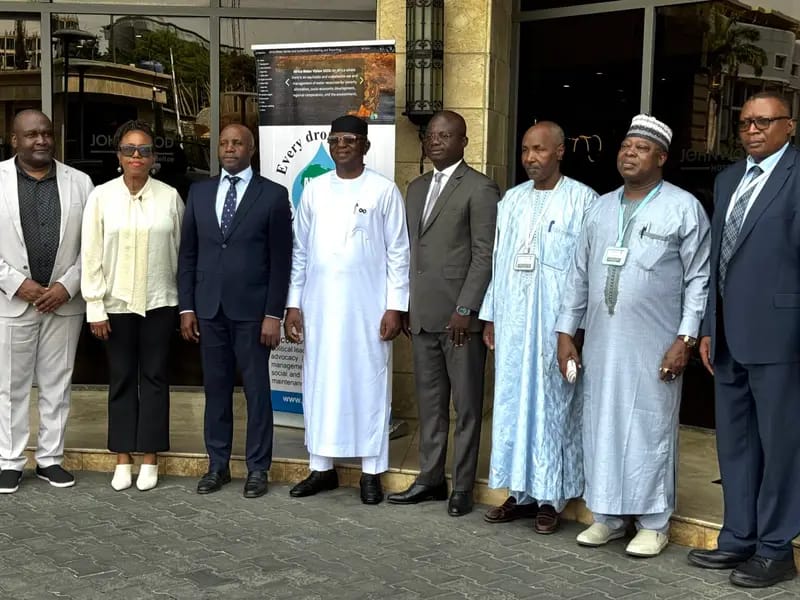
The disclosure was made by Francis Mtitu, Advisor on Transboundary Water Management and Investment at the AU, during the Western Africa Sub-Regional Ministerial and Technical Advisory Committee meeting in Abuja.
Mtitu warned that Africa remains far behind in achieving Sustainable Development Goal 6, citing major disparities in access to clean water and sanitation services.
According to him, over 400 million people across the continent lack access to safe drinking water, while nearly 700 million do not have basic sanitation facilities.
“The African continent remains significantly off track in achieving the Sustainable Development Goals, particularly Goal 6,” he said.
He noted that the gaps continue to impact public health, education, productivity and economic growth, stressing that weak infrastructure in the Water, Sanitation and Hygiene (WASH) sector remains a major challenge.
Mtitu said bridging the deficit would require not only funding but also stronger governance, policy reforms and improved coordination among stakeholders.
“About $30 billion is needed annually to transform the sector and change the current narrative,” he added.
He emphasised that effective service delivery would depend on sound legislation, regulatory frameworks and accountability systems to ensure investments yield sustainable results.
Mtitu also highlighted the role of water in driving Africa’s long-term development under Agenda 2063, noting its importance for agriculture, energy, industrialisation and job creation.
Also speaking, Nelson Gomondo of the African Ministers’ Council on Water said the continent is working towards a water-secure and resilient future through the Africa Water Vision 2063 framework.
He explained that the strategy focuses on economic transformation, regional cooperation, climate resilience, and innovation, while promoting inclusive participation and sustainable resource management.
Gomondo, however, identified challenges such as limited access to technology, weak project preparation and low awareness of water conservation practices, particularly in rural areas.
He called for stronger political will, sustained investment and collaboration among governments, development partners and the private sector.
“The success of Africa Water Vision 2063 will depend on collective action to ensure that no one is left behind,” he said.