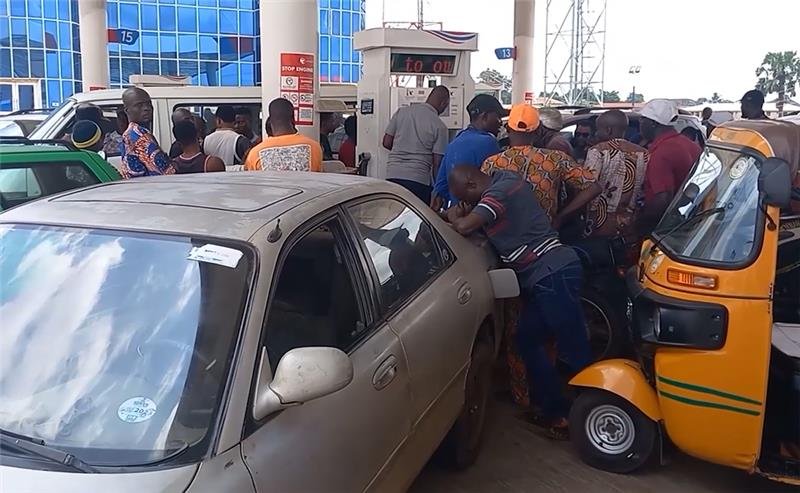

Almost three years after the removal of fuel subsidy in Nigeria, many citizens say the policy has worsened their economic realities, as rising pump prices continue to deepen concerns over the cost of living.
Data shows that fuel prices have climbed from about ₦617 per litre in 2023 to nearly ₦1,400 in 2026, a sharp increase many Nigerians link directly to worsening economic pressure and declining purchasing power.
“Things have become unbearable”
Speaking with RBN in Abuja, a commercial driver in Maitama, Kayode Adeyemo, described the past three years as increasingly difficult for ordinary Nigerians.
He said the impact of the policy has been felt across nearly every aspect of daily life, particularly in transport operations and vehicle maintenance.
According to him, costs that were once manageable have now surged beyond reach, adding that items which previously cost a few hundred naira now run into thousands. He also lamented the unpredictability of daily survival, noting that even large sums of money no longer guarantee access to basic needs.
In his words, the situation feels “like they put rope for Nigerians’ neck,” as he called on the government to reconsider the policy. “If it becomes possible, we will just return them back, because things are hard for everybody,” he added.
“Only the elites benefiting”
In Mpape, another commercial driver, Titus Andrew, said the expected benefits of subsidy removal have yet to reach ordinary citizens.
He argued that while the policy may have been designed for long-term economic reform, its effects have been disproportionately felt by low-income earners.
“There is nothing that we benefit from this,” he said, insisting that the gains appear concentrated among the elite. According to him, the hardship has grown to the point where many residents now avoid short-distance transport due to cost, with some resorting to walking.
“You see how people are moving with their legs… there is nothing like taking drop again,” he noted, adding that a reversal of the policy would help restore affordability, even suggesting a fuel price of “₦100 per litre” as more sustainable.
For Mohammed Yahaya, a worker in Maitama, the fuel subsidy removal remains difficult to fully understand, but its impact on his finances is clear.
He explained that the policy shift has forced him to reduce both personal and business expenses, as rising fuel prices continue to strain income and operations.
“After the removal of subsidy, it really affected me… I have to limit my expenses,” he said, adding that he remains uncertain about the broader purpose of the policy.
Yahaya also questioned the volatility of fuel pricing, noting that petrol now sells for between ₦1,300 and ₦1,350, compared to more stable rates in the past. “For me, it’s not a good thing,” he concluded.
The fuel subsidy was officially removed on May 29, 2023, when President Bola Tinubu announced the decision, stating that funds saved would be redirected into critical sectors such as infrastructure, education, healthcare, and job creation to improve national development.
However, nearly three years later, many Nigerians continue to question whether those benefits have translated into tangible improvements in their daily lives.
Amid ongoing economic pressure, reactions have also trailed the Senate’s approval of a $6 billion external loan request by the Federal Government, to be sourced from the United Arab Emirates and the United Kingdom.
Some citizens have expressed concern over the timing of the borrowing, arguing that Nigeria should be experiencing stronger fiscal stability following subsidy removal.
In Apo, Zikflu Saleh said the country’s current economic direction raises questions about fiscal management and accountability. “After three years of fuel subsidy removal, we are still borrowing… I don’t know what kind of government we have,” he said.
He added that Nigerians are yet to see clear “dividends” from the policy, expressing doubt over transparency in loan approvals and implementation.
Another resident, trader Uzornwuaeze Uzo, also criticised recent economic decisions, questioning whether such borrowing could realistically translate into lower fuel prices or improved living conditions.
“Can it take us to 200 naira per litre? Can it even take us to 300 or 400?” he asked, while describing widespread hardship, unemployment, and food insecurity as signs of a deepening crisis.
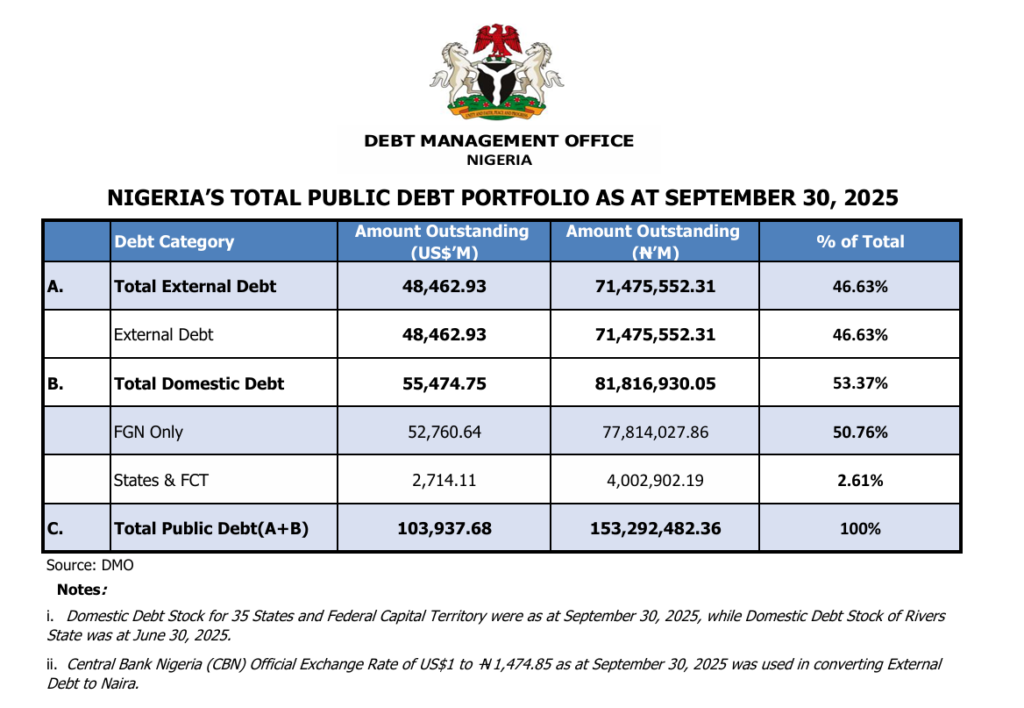
According to the Debt Management Office (DMO), Nigeria’s total public debt stock rose to US$103.94 billion (about N153.29 trillion) as of September 30, 2025, reflecting continued reliance on borrowing to fund national expenditure.
At the 2025 Annual Meetings of the International Monetary Fund (IMF) and the World Bank, global financial institutions advised Nigeria to prioritise revenue mobilisation, improve tax collection, and ensure that new borrowings are directed toward productive investments capable of generating returns.
As debates around subsidy removal continue, many Nigerians say the policy’s long-term benefits remain unclear, while its immediate effects are still being felt in rising transport costs, shrinking incomes, and broader economic strain.
Report by Godwin Igber