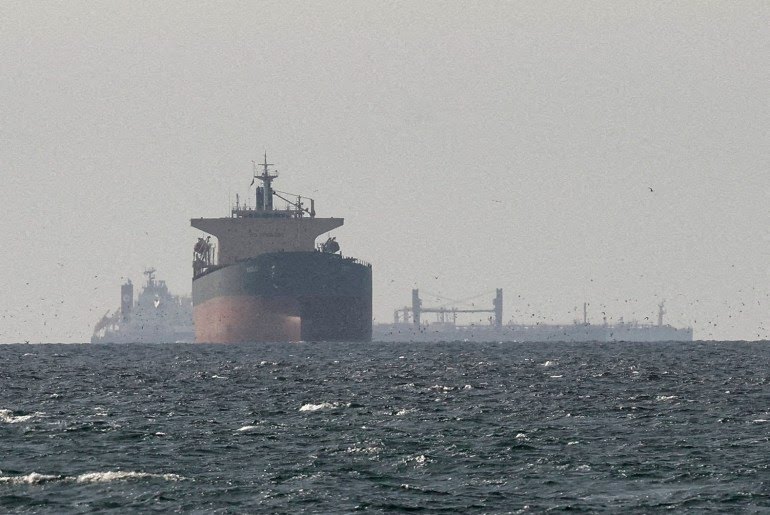

Fresh uncertainty has emerged over the status of the strategic Strait of Hormuz, as conflicting statements from Iran and the United States raise concerns about maritime security and regional stability.
The Islamic Revolutionary Guard Corps (IRGC) said control of the vital shipping lane had “returned to its previous state,” blaming disruptions on what it described as a continued naval blockade imposed by the United States on Iranian ports.
However, Donald Trump insisted the blockade would remain in place, declaring that it would continue “in full force” until a comprehensive agreement with Iran is fully concluded.
Earlier, Iran’s Foreign Minister, Abbas Araghchi, had sought to calm tensions, stating that the Strait of Hormuz was “completely open” to commercial shipping.
He said vessel movements were proceeding in line with arrangements linked to a ceasefire in Lebanon and along previously coordinated maritime routes.
In a related development, Trump also announced that Israel had been barred from carrying out airstrikes in Lebanon, as a 10-day ceasefire took effect.
The truce has already seen tens of thousands of displaced residents returning to their homes after weeks of bombardment.
The Strait of Hormuz, a critical artery for global oil shipments, remains under close international watch as geopolitical tensions between Washington and Tehran continue to shape developments in the region.