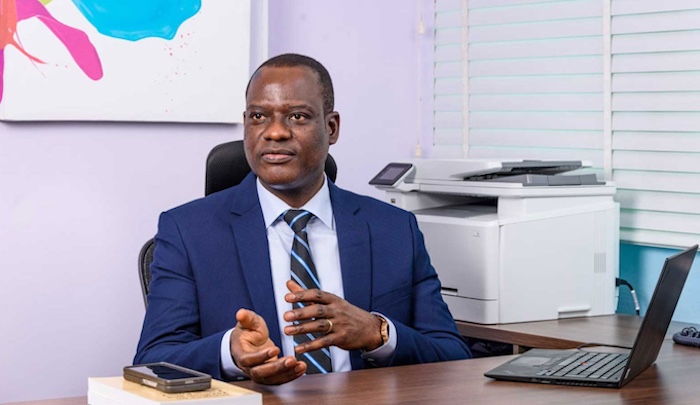

The Minister of Finance and Coordinating Minister of the Economy, Taiwo Oyedele, has assured investors that the federal government will sustain its economic reform agenda, stressing that policy consistency will remain central to economic management.
The assurance was contained in a statement issued by the Federal Ministry of Finance and signed by its Head of Information and Public Relations, Efe Ovuakporie.
Speaking at the launch of the Nigerian Economic Summit Group Private Sector Outlook 2026 in Lagos, Oyedele said the government would not reverse course.
“We are not looking back. Consistency in policy direction is critical. Businesses need to know that decisions taken today will still hold tomorrow,” he said.
He warned that mixed signals or policy reversals could erode investor confidence and slow progress.
The minister, who recently assumed office following the exit of Wale Edun, said the administration is transitioning from economic stabilisation to a phase focused on measurable growth.
“We are moving into a stage where reforms will be judged by outcomes, not just intentions,” he said.
He noted early signs of macroeconomic stability, including exchange rate alignment and improved revenue performance, but stressed that such gains must translate into tangible benefits.
“These improvements must reflect in job creation, higher productivity and better living standards for Nigerians,” Oyedele added.
Outlining priorities for the next phase, the minister emphasised the need for policy consistency, predictability in fiscal and regulatory frameworks, reduced cost of doing business and improved access to capital.
On financing, he said efforts were underway to expand credit across the economy, from consumer lending to industrial financing, with support from institutions such as the Bank of Industry.
“We are working to unlock credit and stimulate private sector participation across key sectors,” he said.
Oyedele also underscored the importance of stronger real GDP per capita growth in tackling poverty.
“Modest growth figures will not be sufficient given our population dynamics. We must aim for growth that improves per capita outcomes,” he said.
Describing the current reform phase as decisive, the minister stressed the need for large-scale investment.
“Reforms on their own do not create growth. We need investment at scale,” he said, adding that investors are more responsive to stable and predictable environments than policy pronouncements.
On productivity, he said Nigeria must shift from consumption-driven expansion to output growth and competitiveness, particularly in agriculture, manufacturing, energy and the digital economy.
He also called for deeper collaboration between government and the private sector.
“Sustainable economic growth cannot be achieved through public policy alone. We need strong partnerships with the private sector,” Oyedele said.
As the country enters what he described as a consolidation phase, the minister said reforms would be deepened alongside improved public financial management and better coordination across all tiers of government.
He, however, acknowledged potential risks, including reform fatigue, inflationary pressures linked to global uncertainties and political tensions ahead of the election cycle.
“Our task now is execution. This phase demands focus, consistency and accountability. That is the direction we are pursuing,” he stressed.
President Bola Tinubu had recently approved a minor cabinet reshuffle, which saw the exit of Edun and the former Minister of Housing and Urban Development, Ahmed Dangiwa, from the Federal Executive Council.