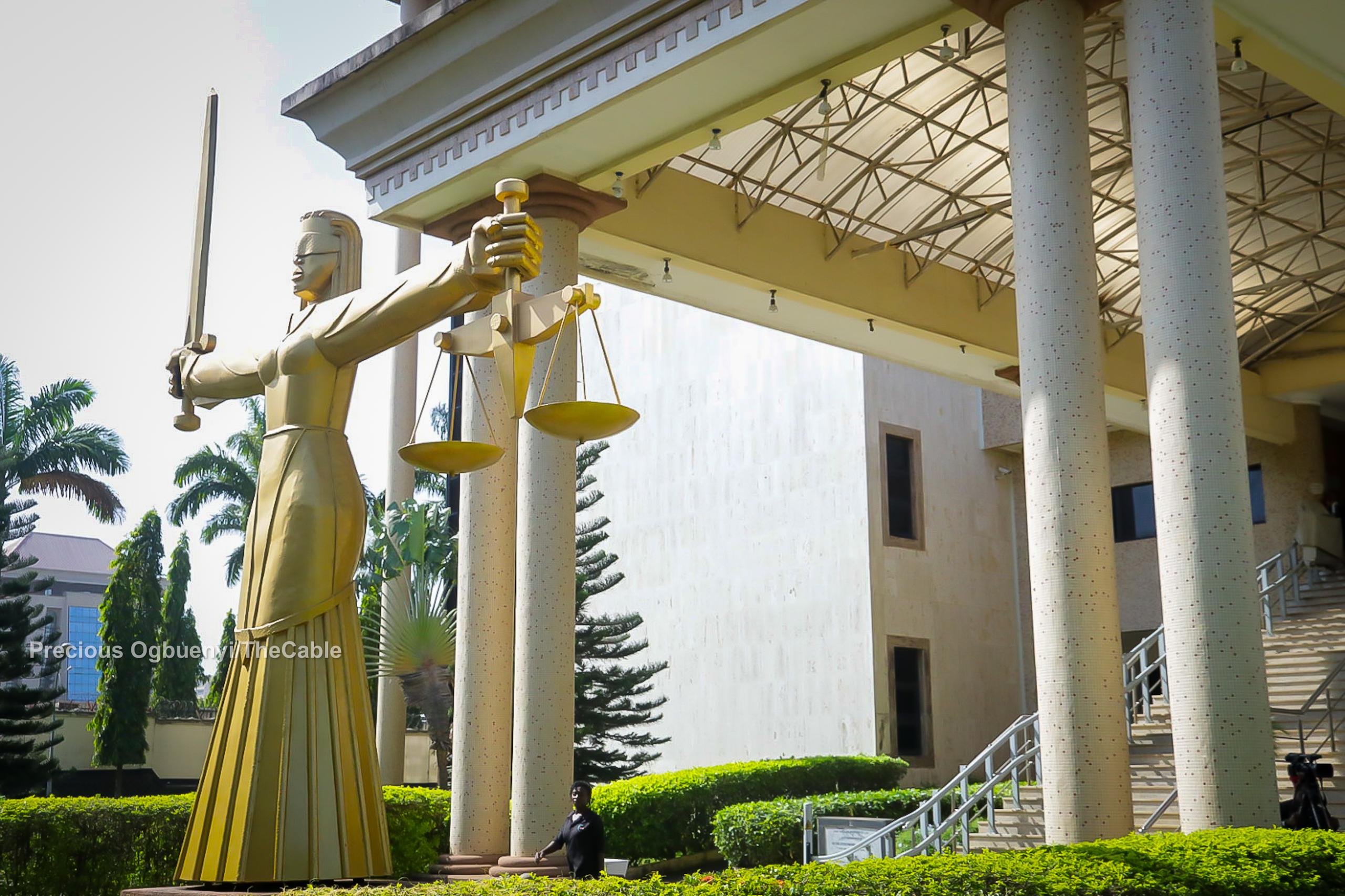

The Federal High Court on Monday barred journalists from covering the bail proceedings of six defendants standing trial over an alleged coup plot against the government of President Bola Tinubu, in a move that has raised fresh concerns about transparency in the high-profile case.
Court officials, supported by operatives of the Department of State Services (DSS), ordered reporters to vacate the courtroom shortly before trial judge Joyce Abdulmalik took her seat.
A court official, who declined to be named, told journalists that the directive originated from the judge, while a DSS operative present at the scene said clarification would be provided later. The journalists complied and left the courtroom around 9:07 a.m. after arriving as early as 8:00 a.m.
The bail hearing involves six defendants accused of plotting an alleged failed coup. They were arraigned last Wednesday on a 13-count charge bordering on treason, terrorism, failure to disclose information, and money laundering.
Those on trial include retired Major-General Mohammed Ibrahim Gana, retired Navy Captain Erasmus Victor, police inspector Ahmed Ibrahim, Presidential Villa electrician Zekeri Umoru, as well as Bukar Goni and Islamic cleric Abdulkadir Sani.
All six defendants pleaded not guilty, after which Justice Abdulmalik granted accelerated hearing and ordered them remanded in DSS custody.
The court had fixed Monday for the hearing of their bail applications, amid growing public interest in the case, which authorities say involves an alleged attempt to destabilise the government.
Former Bayelsa State Governor Timipre Sylva was mentioned in seven of the 13 counts but has not been formally charged, as he is reportedly at large.
Earlier reports indicate that about 40 suspects were initially arrested in connection with the alleged plot, including serving and retired military officers as well as civilians. While the civilian suspects are being tried at the Federal High Court, 36 serving military personnel are facing court-martial proceedings in Abuja.
Monday’s restriction is the latest in a series of limited-access sittings in Justice Abdulmalik’s courtroom. Journalists have on previous occasions been asked to leave proceedings, sometimes with officials citing space constraints as justification, even when accredited reporters were present.
The Federal High Court in Abuja has 13 courtrooms handling both civil and criminal matters, but media access to proceedings has reportedly varied widely depending on the case.
The exclusion of journalists from Monday’s hearing has renewed debate over openness in the judicial process, particularly in cases involving national security and allegations of treason.