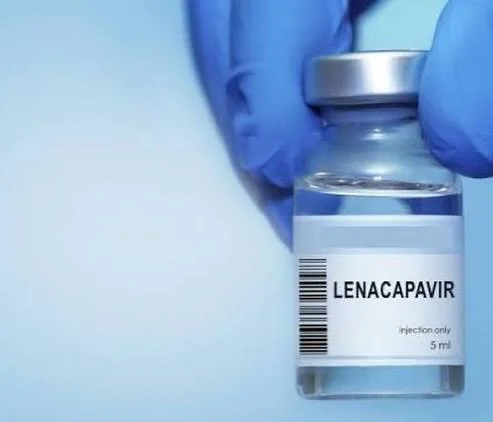

Nigeria has taken a step toward expanding its HIV prevention strategy with the arrival of Lenacapavir, a long-acting injectable medication designed to help prevent new infections.
The development was announced on Wednesday by Dr. Adebobola Bashorun, Director and National Coordinator of the National AIDS, Viral Hepatitis and STIs Control Programme (NASCP) under the Federal Ministry of Health and Social Welfare.
According to Bashorun, the medication arrived in the country on Tuesday and will be deployed as Pre-Exposure Prophylaxis (PrEP), a preventive treatment used by people who are at risk of contracting HIV.
Health authorities say the injectable option could address one of the major challenges associated with prevention programmes — consistent use of daily oral medication.
Bashorun explained that introducing Lenacapavir will broaden the range of prevention tools available and make it easier for vulnerable populations to access effective protection against the virus.
“The introduction of Lenacapavir for PrEP marks a significant step toward broadening the range of prevention choices available to individuals at risk of HIV infection,” he said, noting that the long-acting injectable could help improve adherence among those who struggle with daily medication.
The NASCP coordinator said the initiative received approval from the Coordinating Minister of Health and Social Welfare, Prof. Muhammad Pate, with financial support from the Global Fund.
He added that NASCP would collaborate with partners and stakeholders to ensure the careful rollout and integration of the drug into Nigeria’s HIV prevention programme.
According to him, expanding prevention options forms part of Nigeria’s broader strategy to strengthen the national response to HIV and reduce the rate of new infections.
Nigeria currently has one of the highest HIV burdens globally, with an estimated 1.9 million people living with the virus, ranking the country fourth worldwide.
Public health experts say scaling up prevention tools such as PrEP remains critical to controlling the epidemic and improving long-term health outcomes.