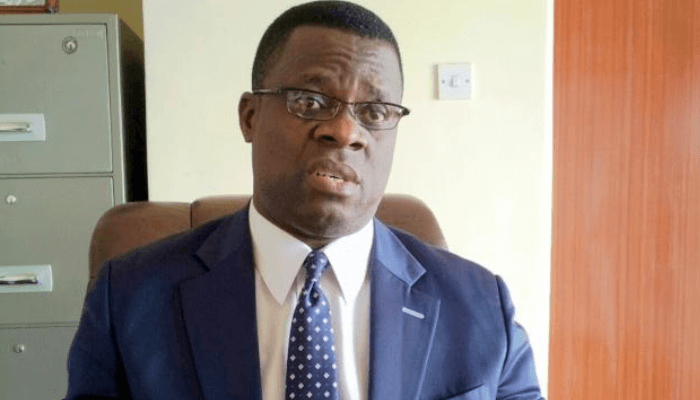

A former Resident Electoral Commissioner of the Independent National Electoral Commission, Mike Igini, has called on opposition political parties to urgently push for amendments to controversial provisions of the Electoral Act 2026 ahead of the 2027 general elections.
Igini made the appeal during a speech delivered at an opposition parties’ convention held in Ibadan, Oyo State, on April 25, warning that certain sections of the law could undermine the credibility of future elections if left unchanged.
“If we are truly serious about free, fair, and credible elections in 2027, all political parties collectively should approach the National Assembly immediately to revisit the newly signed 2026 Act for the repeal of some of the reintroduced obnoxious and very controversial sections capable of undermining the sanctity of the ballot,” he said.
He specifically referenced Sections 60(3), 63(2), 65, 77, 137(3), and 138(2) of the Act, noting that they pose risks to transparency and public trust in the electoral process.
Igini’s intervention comes amid ongoing coalition talks among opposition parties seeking to field a unified candidate against President Bola Tinubu in the 2027 elections.
He stressed that credible elections depend not only on legal frameworks but also on strict adherence to ethical standards by political actors and electoral officials.
“The greatest threat to 2027 might not be technology failure; it is ethics failure,” he said, while acknowledging improvements introduced by innovations such as the Bimodal Voter Accreditation System (BVAS) and the INEC Result Viewing Portal (IReV).
According to him, the integrity of polling units remains central to the credibility of elections, warning that malpractice often begins at that level.
“Elections are not won at collation centers; they are won or lost at polling units,” he said. “If party agents are absent, untrained, or compromised, no amount of technology will save the result.”
Addressing opposition leaders directly, Igini urged them to strengthen internal democratic processes and avoid unlawful approaches to electoral disputes.
“You must demonstrate internal democratic discipline, for credibility begins at home,” he said, adding, “You must reject the allure of extra-legal remedies.”
He also emphasised the need for political actors to accept election outcomes, noting that democracy requires both credible processes and respect for results.
“A free election means anyone can win. A credible election means everyone can trust how the winner emerged,” he said. “To win the right way, you must be willing to lose the right way.”
Igini, who previously served as INEC commissioner in Cross River and Akwa Ibom states, noted that his experience informed his position on electoral integrity. He recalled efforts during his tenure that led to the prosecution and conviction of electoral offenders, describing accountability as critical to strengthening democracy.
He concluded by warning that Nigeria’s democratic future depends largely on the conduct of political elites.
“No nation can rise or make progress beyond the value orientation of its political elites. Free, fair, and credible should not be a mere slogan. Seek it cleanly,” he said.