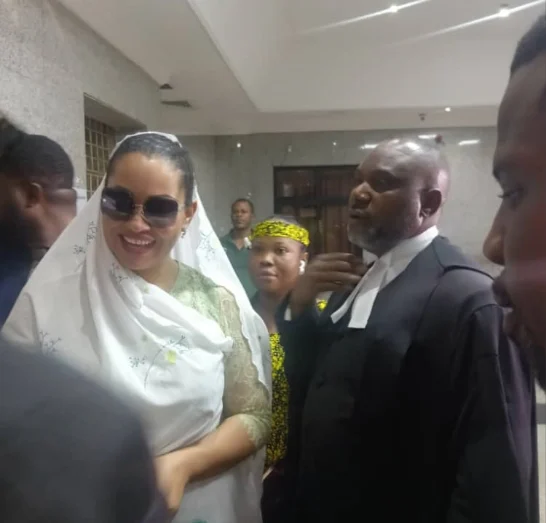

An Abuja High Court on Thursday struck out the criminal charges filed by the Federal Government against the senator representing Kogi Central, Natasha Akpoti-Uduaghan, bringing an end to a high-profile legal dispute that had sparked widespread national debate.
Court documents revealed that the Office of the Attorney-General of the Federation submitted a Notice of Discontinuance, leading the court to formally dismiss the criminal defamation and related charges earlier brought against the lawmaker.
The case, which drew significant public attention, arose from remarks Akpoti-Uduaghan allegedly made during a televised interview. Its prosecution fuelled sustained discussions on freedom of expression, political accountability, and the boundaries of prosecutorial authority within a democratic system.
The Notice of Discontinuance, dated December 12, 2025, effectively terminated proceedings in suit number FHC/ABJ/CR/195/2025. While presiding over the matter, Justice C. N. Oji acknowledged the notice and consequently struck out the case, noting that the development highlighted the importance of restraint in the exercise of prosecutorial powers.
“The court hopes that this decision will pave the way for restraint, healing, and respect for the rule of law in our democratic process,” he said.
Counsel to the Federal Government confirmed the withdrawal of the charges in open court.
“On behalf of the Honourable Attorney-General of the Federation, we have filed a notice of discontinuance in line with the provisions of the Administration of Criminal Justice Act. This decision is taken in the overall interest of justice and public confidence in the legal system,” he said.
Reacting after the court session, Senator Akpoti-Uduaghan described the outcome as a vindication of her position.
“Today’s outcome affirms my belief in the rule of law. I remain committed to serving my constituents and defending the democratic rights of all Nigerians,” she said, while thanking her legal team and supporters for their steadfast backing throughout the proceedings.
The striking out of the charges follows months of legal controversy and sustained public discourse, with several civil society organisations and rights groups previously condemning the case as an attempt to stifle free speech and political engagement.