
The National Economic Council (NEC) has disclosed that Nigeria’s Excess Crude Account (ECA) currently stands at $535,823.39, raising fresh concerns over the country’s fiscal buffers amid ongoing economic reforms.
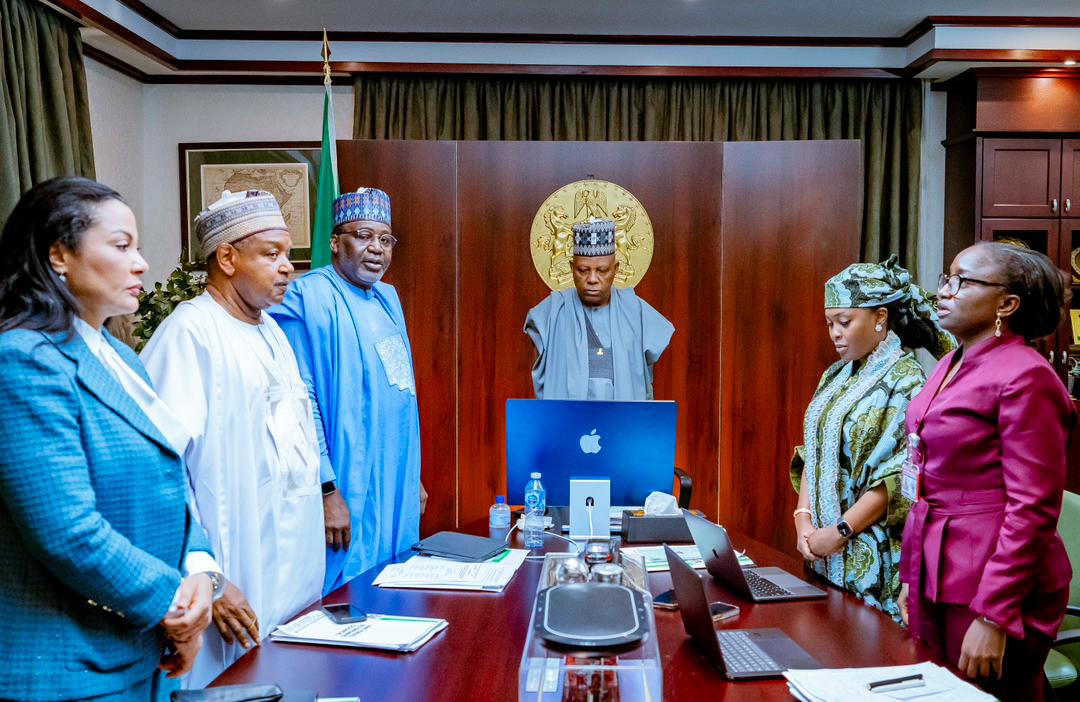
The figure was presented at the council’s 157th meeting on Thursday chaired by Vice President Kashim Shettima, where members also reviewed the balances of other federation accounts.
The resolutions were contained in a statement signed by the Senior Special Assistant to the President on Media and Communications, Office of the Vice President, Stanley Nkwocha.
According to the update, the Stabilisation Account has a balance of N72.84 billion, while the Natural Resources Account stands at N158.19 billion.
The low level of the ECA, which is designed to serve as a savings buffer for oil revenue fluctuations, comes as the federal government continues to pursue economic stability and increased revenue generation.
Speaking at the meeting, Shettima stressed the need for coordinated fiscal discipline and tangible outcomes across all tiers of government.
“We cannot build our way to a one-trillion-dollar economy by federal effort alone. We cannot create millions of jobs by speeches alone,” he said.
He added that economic progress would depend on the performance of all levels of government, not just the centre.
“History will not ask how many meetings we held. It will ask what changed because we met,” the vice president said.
Beyond the financial update, NEC approved key measures aimed at strengthening governance and service delivery, including the adoption of 112 as a unified national emergency number to improve response to crises.
Highlighting the urgency of the reform, Shettima said: “This is not only a technical reform. It is a test of the state’s humanity. In moments of fire, accident, robbery, medical emergency, flood, violence, or panic, citizens do not need bureaucracy. They need response.
He added, “They need to know one number to call, one system to trust, and one coordinated chain of action that moves quickly enough to save lives.”
The council also directed the Ministry of Finance to expedite the release of funds for the rehabilitation of police training institutions nationwide.
NEC further approved the expansion of an ad hoc committee on polio eradication to include additional high-risk states, as part of efforts to eliminate the disease.
In addition, the council endorsed the Renewed Hope Cultural Project and the “Naija Season” initiative, urging sub-national governments to contribute towards tourism and creative economy development.
The near depletion of the Excess Crude Account underscores the urgency of strengthening fiscal buffers and accelerating revenue diversification to safeguard the economy against external shocks.