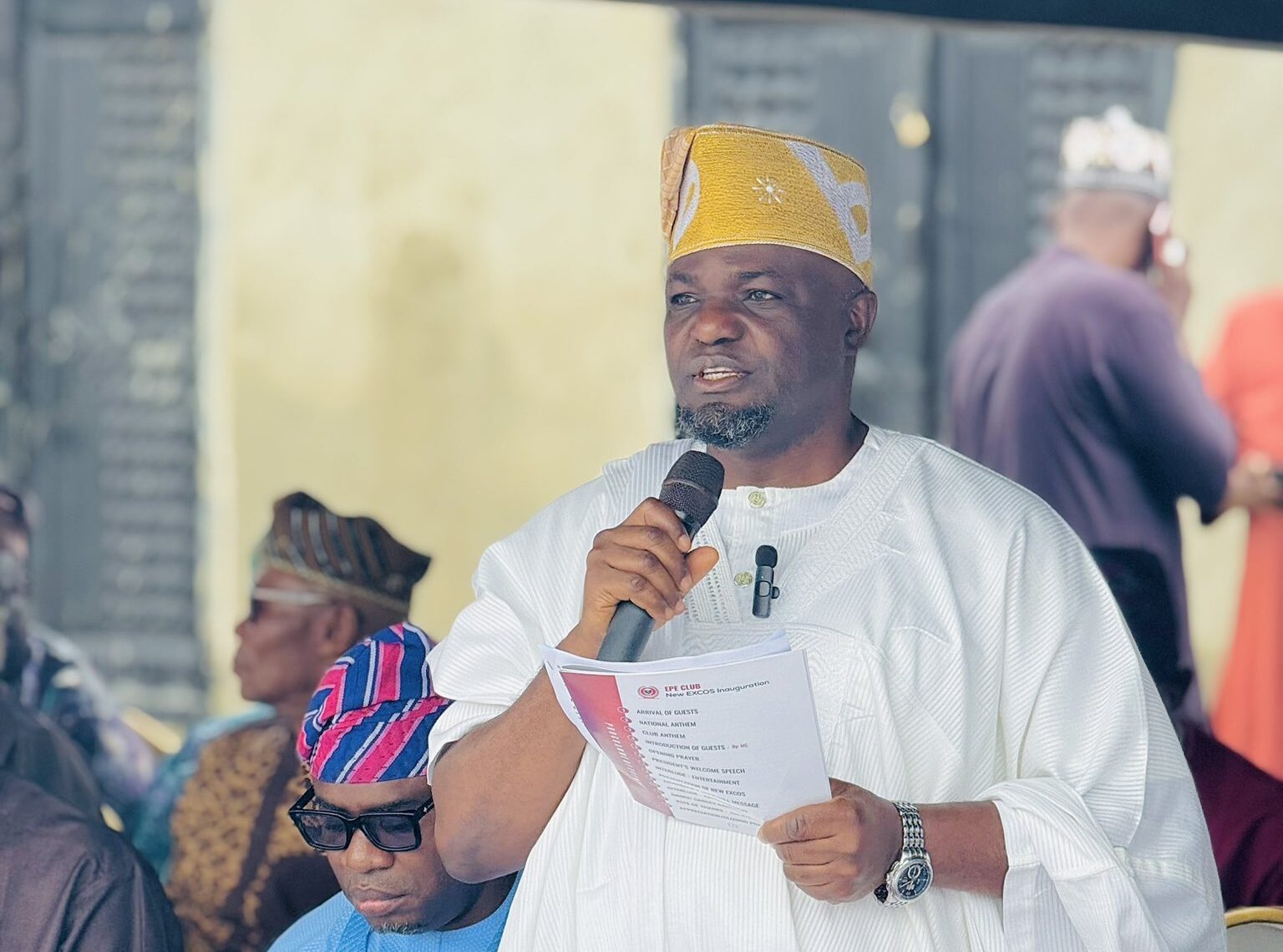

The Chairman, House of Representatives Committee on Electoral Matters, Bayo Balogun, has dismissed concerns over alleged loopholes in Nigeria’s electoral law, insisting that existing provisions are clear and not new.
Balogun spoke on Monday during an interview on Politics Today on Channels Television, amid growing calls by opposition figures for reforms ahead of the 2027 general elections.
He said criticisms of the law were largely driven by misinterpretation, adding that some commentators who should understand the system were contributing to confusion.
“When people who are supposed to know better come out and decide to make a mess out of a system they actually belong to, I find it not too good for our system,” he said.
Balogun specifically faulted former electoral official Mike Igini for raising concerns about potential compromises in the 2027 elections.
“I don’t see a reason why at this stage he would decide to misinform Nigerians,” he added.
On the controversy surrounding Section 63 of the Electoral Act, Balogun explained that the provision on ballot papers without official marks was designed to prevent the introduction of fake ballots.
“The official mark they are talking about is the stamping and signing by the presiding officer. It was put there to ensure that people do not bring ballot papers from outside the polling unit,” he said.
He referenced a Kano election case where unstamped ballot papers became a legal issue, noting that the court relied on the same provision.
“A ballot paper which does not bear the official mark prescribed by the commission shall not be counted. That was what happened in Kano, and it was because of that provision that the case was dismissed,” Balogun stated.
He, however, noted that technological and procedural changes in elections may have reduced the relevance of the rule.
“With what we have now, ballot papers are serialised to specific units. The essence of stamping was to differentiate legitimate ballots, but now each unit has identifiable serial numbers,” he said.
Balogun explained that the law also gives discretion to election officials in certain cases where unstamped ballots can be verified as genuine.
“If the returning officer is satisfied that the ballot papers are from the same booklet issued to that unit, then you cannot reject them simply because they were not stamped. It could be an administrative error,” he said.
On broader calls for amendments, Balogun maintained that the 2026 Electoral Act largely retains provisions from earlier laws and does not introduce new risks.
“These provisions were in the 2022 law and even before then. They are not new,” he said.
He also defended requirements for political participation, including identity verification for aspirants.
“You must prove you are a Nigerian before you can contest. It is not too much to ask that you provide proper identification,” he added.
Addressing demands for extension of timelines for party primaries, Balogun said such proposals must align with existing legal frameworks.
“The law says parties must submit their candidates 180 days before the election. Within that period, there are critical activities, including litigation and preparation of materials. These timelines are already tight,” he explained.
He warned against what he described as pressure tactics by political actors.“If one political party is shouting, it does not mean you must concede to bullying. Let them bring specific proposals and debate them on the floor of the House,” he said.
Balogun reaffirmed that any changes to the law must follow due legislative process, insisting that the current framework remains adequate for credible elections if properly implemented.