
Amid rising unrest in South Africa, the Nigerian Consulate, in collaboration with the Nigerian Citizens Association in South Africa (NICASA), has announced a free repatriation flight for Nigerians willing to return home permanently.
The President of NICASA, Frank Onyekwelu, disclosed this in an interview, noting that the worsening security situation had forced many Nigerians to shut down their businesses and seek safer options.
“The Nigerian Consulate in conjunction with NICASA has offered a free repatriation flight to any Nigerian who wishes to leave South Africa permanently, and the process is ongoing as we have recorded many Nigerians signalling interest to return home,” he said.
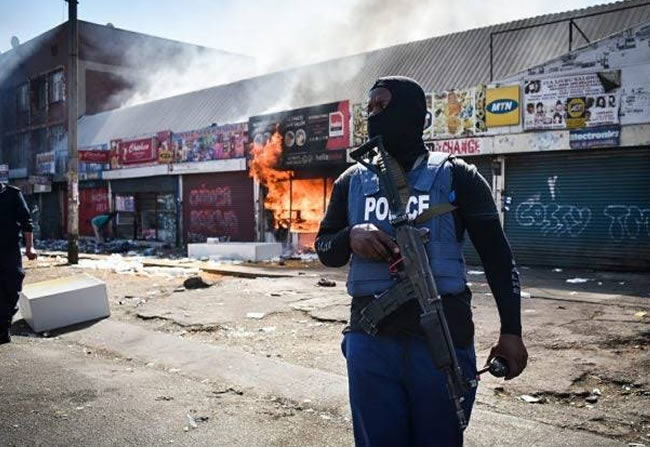
The development comes as violent anti-foreigner protests spread across major cities including Pretoria, Johannesburg, Durban and parts of KwaZulu-Natal, leading to widespread harassment, looting, property destruction and injuries.
Many Nigerians living in the country described their ordeal as harrowing, saying they have been forced indoors amid fears of targeted attacks.
The unrest has been linked to groups such as Operation Dudula and other anti-immigration movements accusing foreign nationals of contributing to unemployment and crime.
The situation has triggered panic within the diaspora community, with the Nigerians in Diaspora Commission advising Nigerian business owners to temporarily shut down operations to minimise risks.
The Nigerian Consulate General in Johannesburg confirmed the deaths of two Nigerians—Amaramiro Emmanuel and Ekpenyong Andrew—in separate incidents linked to the violence.
According to the Consul-General, Ninikanwa Okey-Uche, Emmanuel died from injuries allegedly sustained after being beaten by personnel of the South African National Defence Force, while Andrew’s body was later discovered at a mortuary in Pretoria after an encounter with local law enforcement.
Viral videos circulating online showed protesters marching through streets armed with sticks and chanting anti-foreigner slogans, with some openly ordering foreigners to leave the country.
In one incident, a Nigerian trader was confronted and told to return home with his family despite pleading that he had lived and worked in the country for years.
Nigerian business owners also reported heavy losses, with shops and supermarkets targeted by looters. A trader in Johannesburg, Yemisi Adewale, said she narrowly escaped an attack at a local market.
“They are specifically targeting businesses owned by Nigerians and Ghanaians. Once your shop is open, they attack and loot your goods,” she said, adding that many traders have now shut down operations entirely.
Another trader described the situation as “organised violence disguised as protest,” saying hundreds of shops owned by foreigners had been looted.
Diaspora leaders, however, noted that the unrest appears concentrated in informal settlements. The President of Ohanaeze Ndigbo in South Africa, ABC Okokoh, said small-scale traders in such areas were the worst affected.
He added that while some parts of the country remain calm, those in affected areas are staying indoors for safety.
Similarly, the President of the Association of Yorubas in Diaspora in South Africa, Olusola Agbeniyi, said security presence had helped maintain order in many locations, though tensions remain high in hotspots.
Reacting to the situation, the Nigerians in Diaspora Commission said there was no official update yet, but confirmed that the matter had been escalated to the Minister of Foreign Affairs, Bianca Odumegwu-Ojukwu, who is engaging with South African authorities.